

REQUEST A DEMO
Thank you! Your submission has been received!
Oops! Something went wrong while submitting the form.
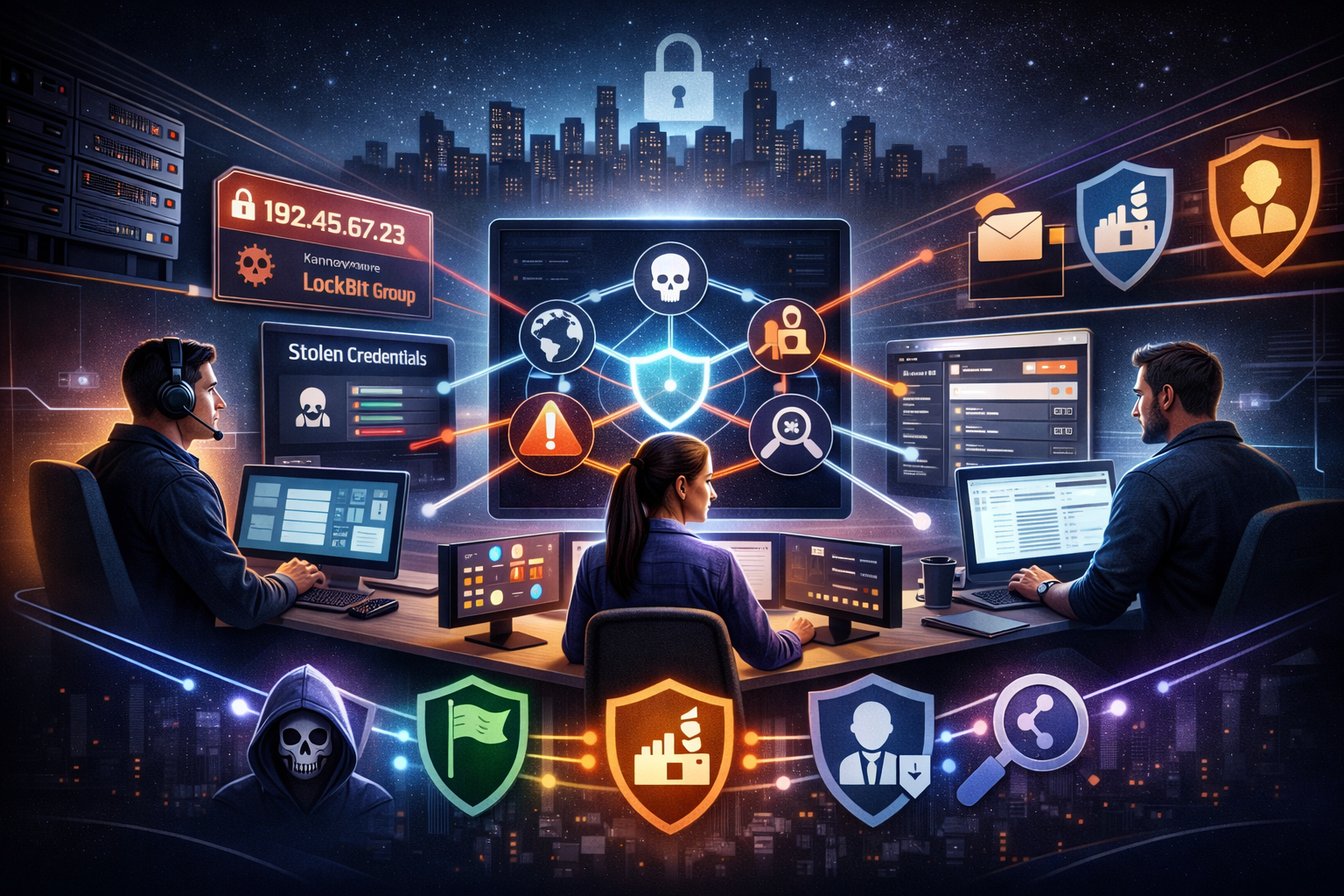
Cyber threat intelligence needs to shift from isolated data feeds into connected intelligence operations. Most organizations already collect plenty of intelligence, but it often lives across separate tools, teams, and workflows. When intelligence works together, organizations reduce noise, move faster during incidents, and gain clearer visibility into real risk.
The cybersecurity industry does not have a data shortage problem. Security teams are flooded with intelligence from threat feeds, dark web monitoring, vulnerability disclosures, brand protection tools, attack surface scanners, and internal telemetry.
The real challenge is fragmentation.
Different intelligence functions frequently live in separate platforms owned by different teams. IOC management sits inside a TIP. Dark web monitoring may live with digital risk or fraud teams. Attack surface visibility often belongs to vulnerability or infrastructure teams. Reporting and analysis may happen elsewhere.
This fragmentation slows correlation, increases operational overhead, and can delay decision making when incidents occur.
At Morado, our focus has been simple. Intelligence should work together so security teams can operate with context instead of isolated signals.
Dark web monitoring surfaces an Initial Access Broker (IAB) advertising network access to an organization similar in size, industry, or geographic footprint to yours. These listings rarely name the victim directly, but experienced intelligence teams recognize patterns in how access is described.
From there, analysts pivot into broader intelligence context. The IAB alias can be correlated against historical data to identify related aliases, past campaigns, associated malware families, or known threat actor relationships. In some cases, those connections reveal commonly exploited vulnerabilities, infrastructure patterns, or operational tactics.
That intelligence can immediately inform defensive actions. Known indicators tied to those actors can support retrospective threat hunts, while detection playbooks can be created to monitor for similar activity going forward. At the same time, vulnerability intelligence linked to the group’s tradecraft can be compared against your attack surface to determine whether exposed assets match known exploitation patterns.
If gaps are identified, remediation can be prioritized based on realistic threat likelihood rather than theoretical risk.
Individually, dark web signals, IOC intelligence, and vulnerability data each provide value. When they are connected through a unified intelligence workflow, they create actionable context instead of isolated awareness.
That is where intelligence shifts from collection to operational advantage.
Historically, cyber threat intelligence programs focused heavily on indicators of compromise. The model was straightforward:
This approach still plays an important role. Indicators remain essential for detection, response, and operational security.
However, relying only on indicators can limit visibility. Threat actors evolve quickly, infrastructure changes frequently, and many risks emerge before formal indicators exist. Without broader context, teams often react to symptoms rather than understanding underlying threats.
Modern intelligence programs increasingly emphasize correlation, context, and operational workflows alongside traditional indicator management.
Many vendors now provide overlapping data sources such as dark web monitoring, digital risk intelligence, or vulnerability feeds. Access to data is no longer the primary differentiator.
Workflows are.
Security teams need a central operational environment where they can:
When those workflows remain fragmented, noise increases and important signals can be missed. When workflows are unified, intelligence becomes operational rather than reactive.
This shift is driving the next phase of cyber threat intelligence maturity.
This evolution is reflected in frameworks like the Cyber Threat Intelligence Capability Maturity Model (CTI-CMM), developed by leaders in the threat intelligence community. The model emphasizes that mature intelligence programs support multiple stakeholders, integrate diverse intelligence domains, and focus on operational decision support rather than simple data aggregation.
A key takeaway from CTI-CMM is that intelligence maturity comes from coordination. Collection, analysis, dissemination, and feedback must work together across teams and workflows.
If you want to explore the framework directly, you can reference it here:
This aligns closely with what many organizations are discovering in practice. Intelligence maturity is less about how many feeds you ingest and more about how effectively intelligence informs action.
Threat Intelligence Platforms continue to provide critical capabilities for managing indicators and analyst workflows. At the same time, mature intelligence programs increasingly organize their activities around Priority Intelligence Requirements.
A typical example might be:
Monitor ransomware threats targeting financial services.
Instead of manually configuring separate tools, a connected intelligence environment can align collection and analysis activities around that requirement. This might include monitoring threat actor discussions, tracking relevant vulnerabilities, watching infrastructure patterns, evaluating third party risk exposure, and maintaining IOC visibility tied to that threat category.
The goal is not more alerts. The goal is intelligence aligned to meaningful risk questions.
When PIRs drive intelligence workflows, teams gain consistency, clarity, and better decision support.
Threat actors do not separate their operations into neat categories. They move fluidly across infrastructure, vulnerabilities, identities, supply chains, and social engineering.
Defensive intelligence benefits from the same fluidity.
When intelligence workflows, data sources, and analysis functions operate together:
This is not simply about consolidating tools. It is about creating a central intelligence capability that supports the entire organization.
Cyber threat intelligence is moving from a collection discipline to an operational one. Organizations that succeed will not necessarily have the most data. They will have the best connected intelligence workflows.
Fragmented tooling increasingly creates operational friction. Unified intelligence environments improve visibility, accelerate response, and support better strategic decisions.
This evolution is already underway across enterprise security teams, MSSPs, and intelligence driven organizations.
Most organizations already have valuable intelligence. The challenge is making that intelligence work together.
When intelligence remains fragmented, risk visibility suffers and response slows. When intelligence workflows are unified, context improves and decisions become clearer.
The future of cyber threat intelligence is not simply more data. It is better integration, stronger workflows, and intelligence that works together.