

REQUEST A DEMO
Thank you! Your submission has been received!
Oops! Something went wrong while submitting the form.
Understanding external exposure is critical, but visibility alone does not reduce risk.
Many organizations discover exposed infrastructure, vulnerabilities, or misconfigurations through scanning tools. However, these findings often end up in long lists of alerts or reports that are difficult to operationalize.
The real challenge is turning exposure data into actionable intelligence.
Security teams need a way to connect infrastructure discovery with vulnerability intelligence, threat activity, and remediation workflows. Without that connection, exposures remain isolated findings rather than part of a broader security picture.
In many environments, different types of security information live in separate tools.
Infrastructure discovery may live in one system. Vulnerability scanning in another. Threat intelligence in a separate platform. Dark web monitoring in yet another.
When these datasets cannot easily connect, important relationships remain hidden.
A vulnerability scanner may identify a critical vulnerability on a server, but without understanding whether that server is externally exposed, it is difficult to determine the real level of risk.
Similarly, leaked credentials discovered on the dark web may not appear urgent unless those credentials can be tied to accessible infrastructure.
The most valuable insights often emerge when these datasets are viewed together.
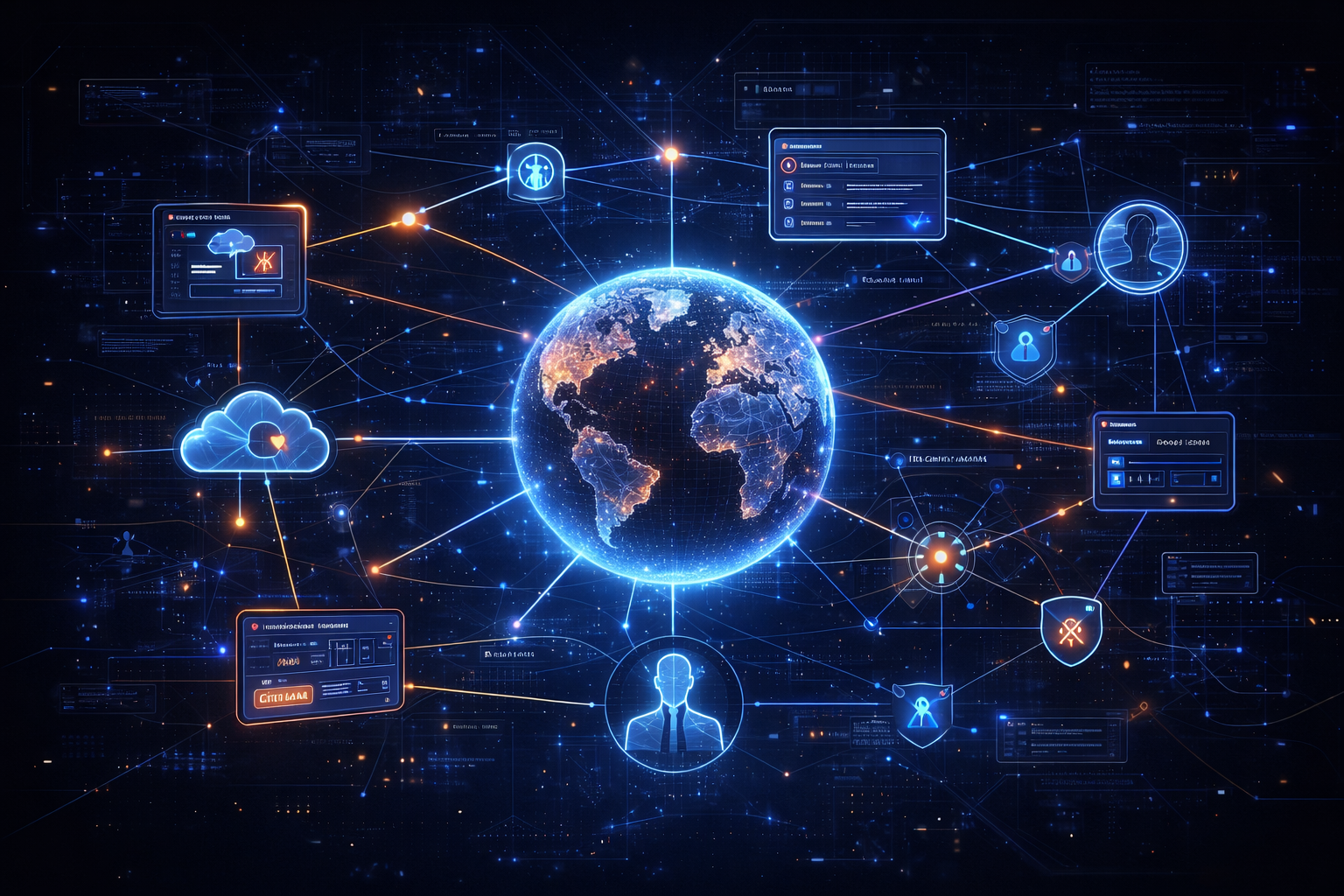
One way to solve this problem is by structuring intelligence in a way that allows different datasets to connect naturally.
Threatnote uses the STIX 2.1 intelligence framework to represent security information as connected objects.
Within this model, different types of data can be linked together, including:
When attack surface monitoring discovers a new asset, it can be represented as an infrastructure object within the intelligence model. Vulnerabilities affecting that asset can be attached directly to it. Threat intelligence associated with those vulnerabilities can also be connected.
Instead of maintaining isolated alerts and reports, analysts gain a connected intelligence graph that reveals how infrastructure exposure, vulnerabilities, and threat activity intersect.
This is the concept behind Intelligence That Works Together.
Once exposures are connected with broader intelligence, the next step is acting on that information.
Security teams need workflows that allow them to investigate findings, coordinate remediation, and track progress.
Within Threatnote, attack surface discoveries can move directly into operational workflows where analysts investigate findings and correlate them with other intelligence.
Teams can:
This approach allows security teams to move beyond static reports and begin managing exposures as part of an ongoing intelligence lifecycle.
In the final article in this series, we will look at how organizations can take this approach even further through Continuous Threat Exposure Management.